Dear Supporters of OpenGLAM and Open Event Data

Welcome to our summer newsletter containing the latest developments in cultural heritage and digital transformation. Going forward, this newsletter will include updates on Open Event Data and information from our associated working group. This edition features news from the upcoming OpenGLAM Night and GLAMhack24 in Lucerne to the first edition of the Open Event Data Monitoring. We hope you enjoy reading and wish you a pleasant summer ☀️!
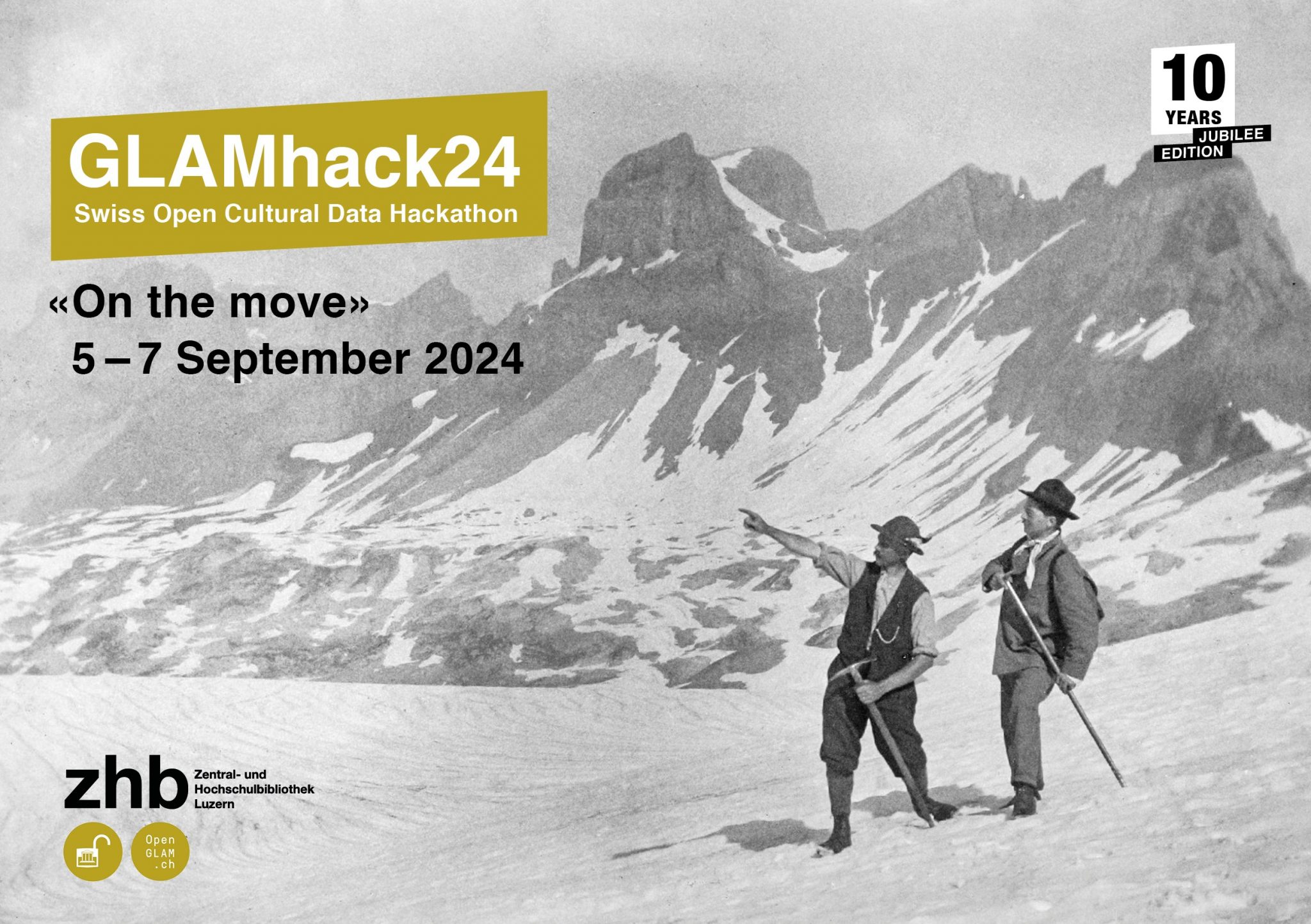
GLAMhack24 – "On the Move"

On September 5, 2024, the pre-program of the GLAMhack24 in Lucerne will start with an afternoon workshop on GLAM and Digital Humanities at Neubad, organized in cooperation with DARIAH-CH. Afterward, participants can join for dinner at their own expense before the OpenGLAM Night starts. The evening event, open to the public with free admission, features contributions from Mexican artists, an immersive performance by Swiss Afro-Cuban artist Ivonne Gonzalez, and a showcase of remarkable Lucernese people. No additional registration is required for the OpenGLAM Night, so don't hesitate to bring your friends and family to the event.

GLAMhack24 follows on September 6-7, bringing together cultural institutions, developers, artists, and digital humanists to work on projects using open cultural data. With the theme “On the Move,” participants will focus on cultural artifacts and memories related to migration, collaborating to develop concepts, create prototypes, and engage in artistic creations.
Register now for this event

Open Event Data Initiatives in Switzerland

Our Open Event Data Working Group works towards the automatization of data transfer among event platforms and promoting data sharing and reuse. The group has released the first version of the Open Event Data Monitoring, which verifies whether platforms adheres to the principles of the Open Event Data Manifesto. Over the next few months, this monitoring will be expanded to include more cultural agendas and additional principles.

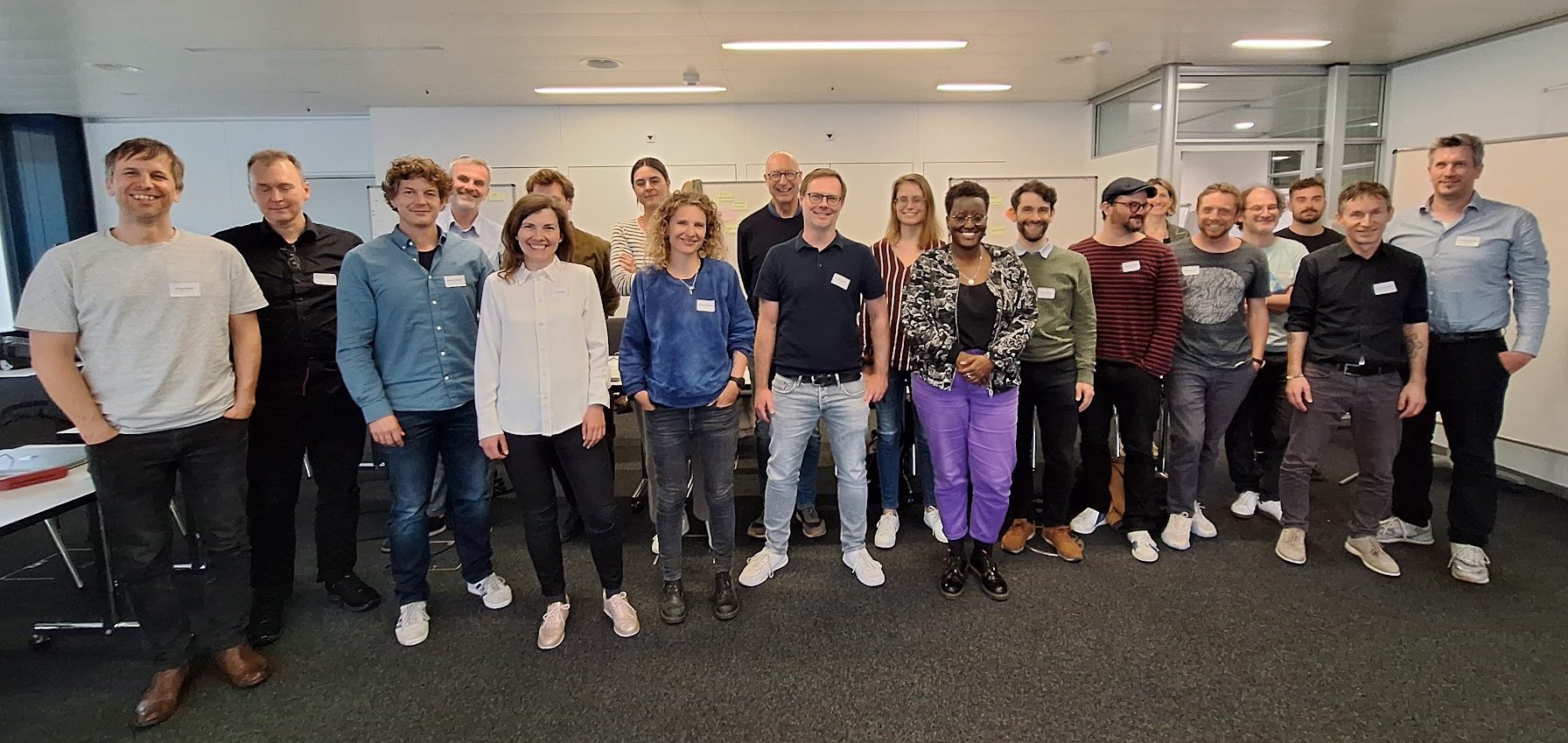
Additionally, on May 6, 2024, stakeholders from Switzerland's cultural agendas met at the Bern University of Applied Sciences to reaffirm their commitment to Open Event Data and the "Once Only" Principle. This principle aims to streamline event information dissemination by allowing organizers to input data once, which is then shared across platforms. Moving forward, stakeholders will work together to tackle practical challenges and enhance communication strategies, ensuring efficient event data management and accessibility for all.

Saving Ukrainian Cultural Heritage Online (SUCHO)

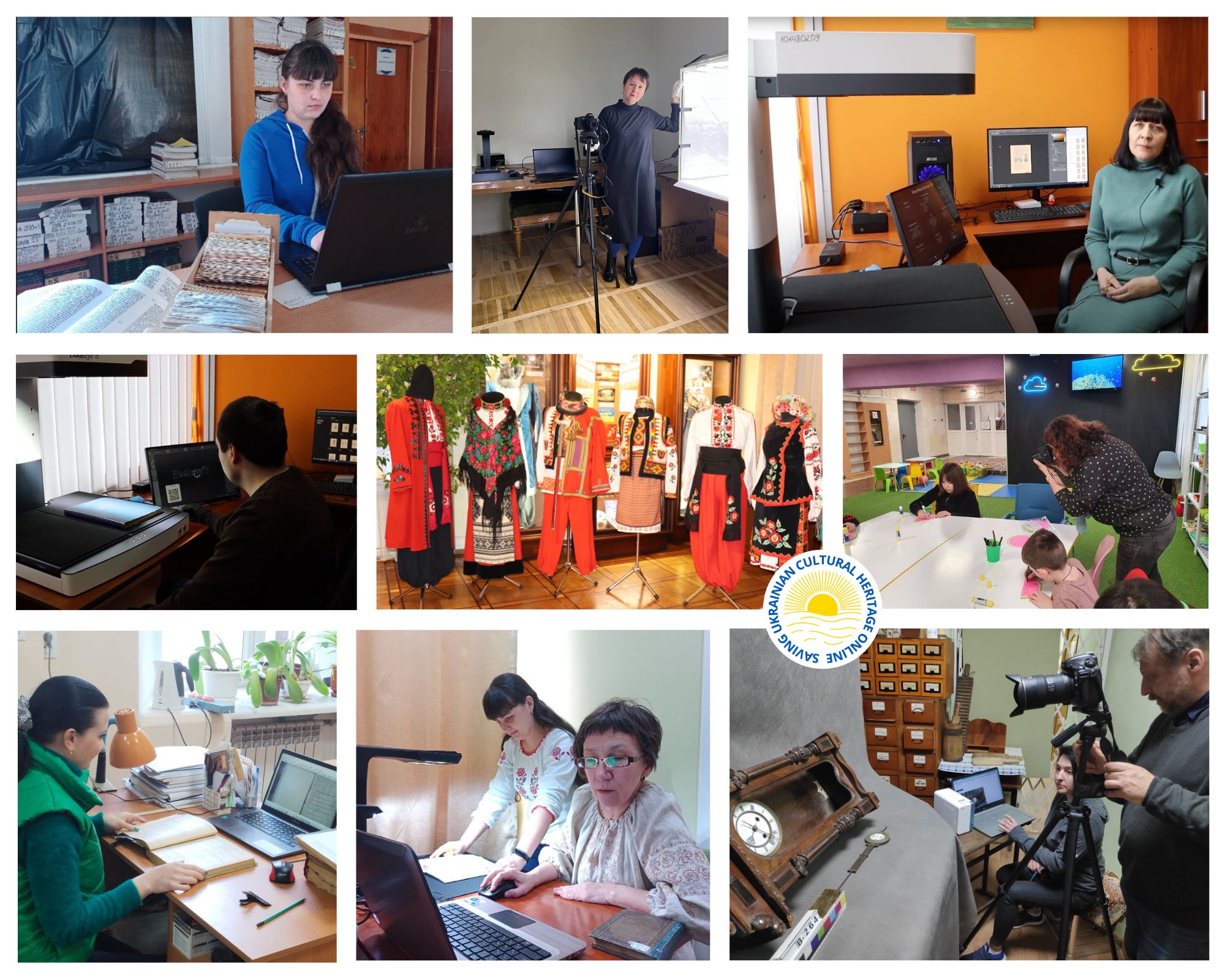
SUCHO, a volunteer-driven initiative, has preserved over 5,000 websites and 50TB of data from Ukrainian cultural institutions since the conflict began. Equipment donations to 70+ institutions support ongoing digitization efforts, while a curated gallery showcases digitized materials and web archives. Unique to SUCHO is the preservation of war-related memes as a richly annotated dataset for future scholars. This initiative stands as a testament to international collaboration in safeguarding cultural heritage during crisis.

Handbook for the Creation of Non-Discriminatory Metadata for Historical Sources and Research Data

This handbook, developed under the Stadt.Geschichte.Basel research project, serves as a comprehensive guide for creating non-discriminatory metadata. Aimed at historians, archivists, librarians, and open research data enthusiasts, authors Moritz Mähr and Noëlle Schnegg emphasize the practical application of the FAIR principles – ensuring data is findable, accessible, interoperable, and reusable. Through case studies and practical advice, the handbook demonstrates how machine-readable metadata enriches research and teaching, influencing the interpretation of historical sources. Continuously evolving as a "living document," it promotes inclusive and non-discriminatory representation of historical content.

Switzerland Pledges Support to Open Knowledge Maps

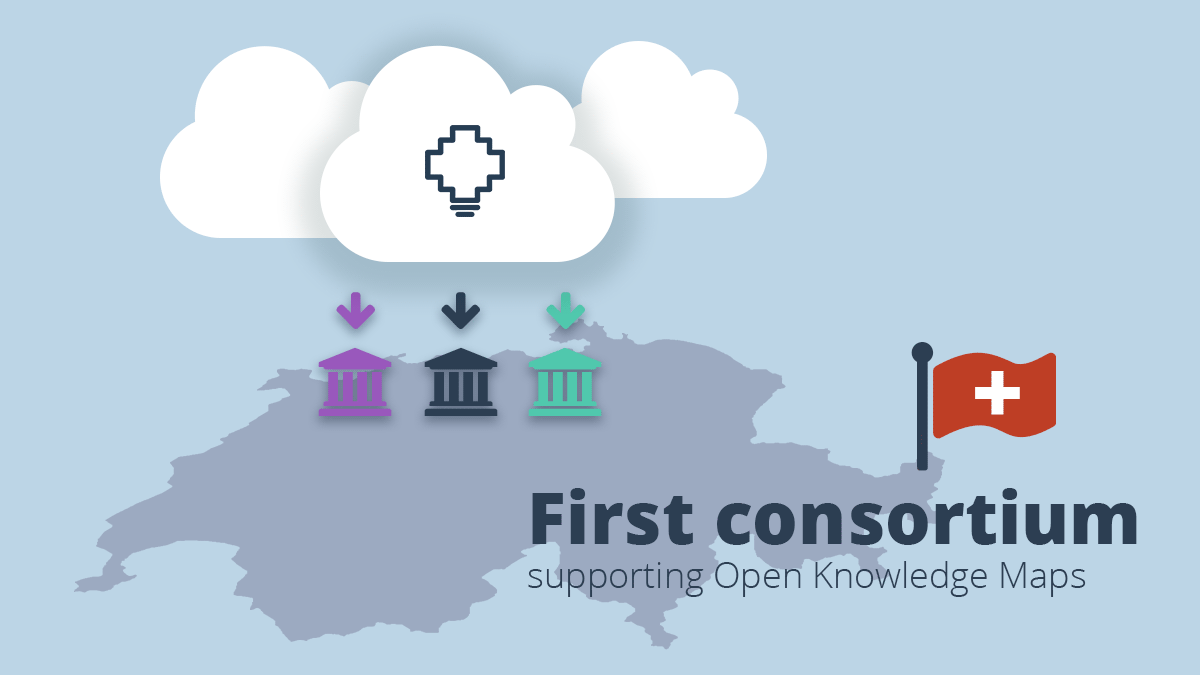
Nine Swiss academic institutions, led by the Consortium of Swiss Academic Libraries (CSAL), have partnered with Open Knowledge Maps to enhance the accessibility and visibility of Swiss research. This collaboration integrates AI-driven visual discovery into Switzerland’s national library platform, swisscovery, benefiting over 500 libraries. The partnership underscores Switzerland’s commitment to open science, supporting innovative research services and sustainability for Open Knowledge Maps. Learn more about this here.

WikiLearn Course Expansion Announcement

Learn to upload and edit files on Wikimedia Commons with OpenRefine. This is a self-paced course with computer-graded exercises. Following its success in English, Spanish, and French, the course is now available in Italian. More translations are forthcoming, including Portuguese. Please share these resources to help others engage with Wikimedia Commons and OpenRefine.

Stay GLAMorous,
Gaston | OpenGLAM.ch (gaston.wey@opendata.ch)

Opendata.ch (and more) Upcoming Events:


Friends of OpenGLAM and Open Event Data

This newsletter is brought to you thanks to the kind support of our Friends of OpenGLAM Network and the Open Event Data Network.

Friends of OpenGLAM Institutional Supporters
ETH Bibliothek, infoclio.ch, Museum für Kommunikation and PTT-Archiv, Schweizerische Nationalbibliothek Schweizerisches Nationalmuseum, Schweizerisches Sozialarchiv, Wikimedia CH

Open Event Data Institutional Supporters
Canadian Association for the Performing Arts, Verein Saiten, Synventis


Opendata.ch

This newsletter is curated by the Opendata.ch team.
LinkedIn
Twitter
Masterdon
Website